
We’ve been using Bruntingthorpe Proving Ground for part of our development testing since 2003. We’ve always ‘driven’ our development vehicles rather than just rely on a dyno for calibration development.
And, over the years, we’ve used a number of test facilities. The locality of Bruntingthorpe has worked very well for us as it’s only 30 minutes away from Revo HQ.
Regardless of the product, we’re developing we always assess the standard vehicle. Whether we’re looking at calibration, braking, airflow or any other area on a vehicle we test to see what the vehicle (or part) is capable of.
Engine calibration is normally one of the first things we look at. This involves assessing where physical restrictions are with a vehicle. In turn, this helps us to prioritise hardware development.
The intricacies of development differ depending on the type of product we’re talking about; hardware Vs software for example.
Road, Track & Dyno
Whether we’re solely looking at Stage 1 engine calibration or a package consisting of hardware and software (Stage 2, 3 or above) we follow the same basic testing procedures. Road testing, dyno-testing and track testing.

A proving ground enables us to drive vehicles in high speed, high load, high-stress scenarios in a safe, controlled manner. It’s physically impossible to do this on the road without breaking the law. And even if someone was willing to do that it would be incredibly difficult to perform consistent tests on the road.
Moving To Millbrook
We’ve been looking at different facilities for some time now, just to improve on our (already thorough) high-speed testing procedures.
However, earlier this year Bruntingthorpe was bought-out and have restricted access to their facility to OEM only; so no driver training, no race car testing, no aftermarket.
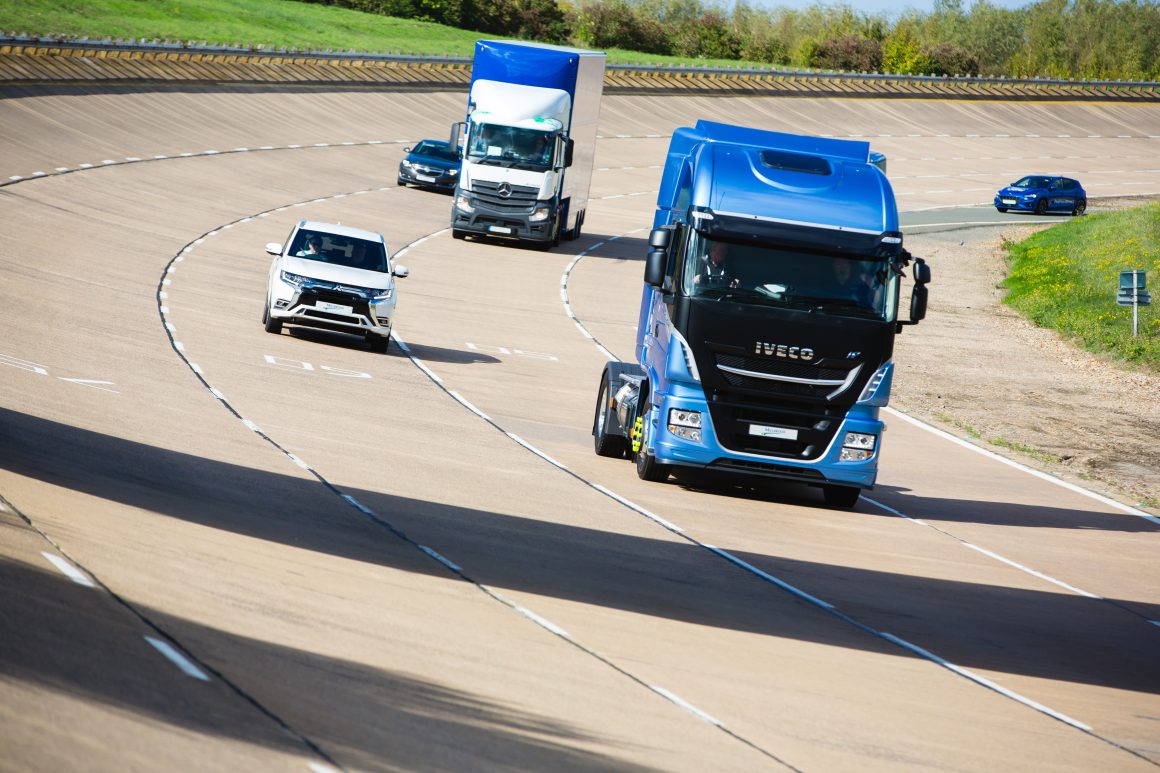
We’ve made great use of the facilities there over the years and it’s a shame it’s come to an end but, to be honest, there are better places to use.
What is Millbrook, who else uses it and where is it located?
Millbrook has a number of test facilities around the world but their UK automotive site has over 70km of test tracks and a vast range of test facilities.
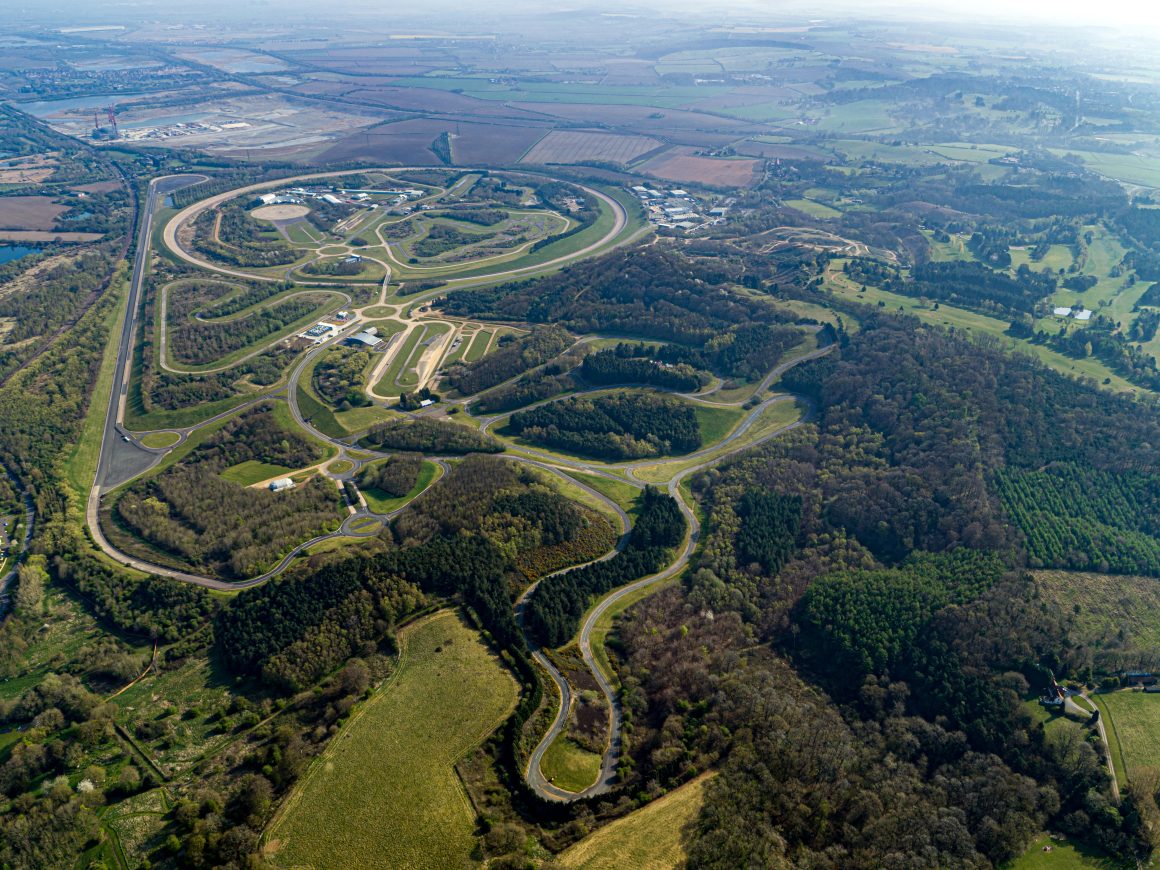
It was originally built by General Motors in the 1960s as a test site for Vauxhall and Bedford. But was sold in the late 80s and the facilities opened up to non-GM companies.
It’s now one of the best independent vehicle test and validation facilities in Europe.
What are the advantages of Millbrook over Bruntingthorpe?
Bruntingthorpe is an ex-RAF base and is essentially a privately owned airfield. The track can be used in a number of ways but it really is one track based around a runway.
Over the years the vehicle storage has taken over some of the track space and, to be honest, the track surface has never been great there. Stones (causing stone chips) have always been an issue.
Millbrook is (to be blunt) in a different league. It doesn’t really give us more ability in terms of the testing we want to do, but it makes it much easier for us to perform those tests.

Millbrook has specific tracks for each type of testing (high speed, acceleration, handling, etc.) rather than one for all (ala Bruntingthorpe).
The quality of the tracks are much better and overall it’s much more professional. Take the High-Speed Circuit as an example; whilst you could use the runway at Bruntingthorpe to take a car to high speeds you couldn’t hold it there for any considerable length of time.
High-Speed Testing
The High-Speed Circuit enables us to keep a vehicle up at speeds in excess of 150mph to test durability and protection methods for a number of miles. Acceleration testing is another area where Millbrook helps.

At Bruntingthorpe you always had to wait for there to be no one in the way and had to compensate for slight incline/decline depending on which part of the track we were on.
The difference in surfaces had a big impact on traction as well; the ‘Mile Straight’ at Millbrook is completely flat with purpose-built banked entry and exits and is limited to one user at a time. It’s therefore much better suited than the old runway at Bruntingthorpe.
What do we test (what parameters, EGT etc) on the vehicle at a proving ground?
Depending on what we’re testing and where we’re at within the development process our tests will differ. With initial testing, we’re looking at what a vehicle does in standard form.

For example we monitor the fuel system, airflow/boost capability, temperature control and look at how efficient the factory systems are, how much headroom there is with existing components and what’s likely to be the biggest restriction.
We run specific tests for different parts of development; general driving is as important as all out full throttle tuning. We’re not just trying to make vehicles faster we develop to give a better driving vehicle for our customers.
Key to development testing is understanding what is going on behind the scenes so we constantly monitor and log as much as possible using both OBD and external sensors.

For example, if we’re looking at protection at high load/speed we want to know what’s happening with turbine speed, exhaust gas temperature, injector and fuel pump duty cycle to name but a few. This way we can make sure we know where limitations are and put in suitable protection measures.
Why don’t we just use a dyno for development (like some other ‘tuners’)?
We do use a dynamometer for development, we just do much more than that so it’s a small part of development rather than the be-all and end-all.
Dyno’s are great tools but they do have limitations. As a brief overview, a dyno is trying to simulate real-world conditions and unless in a cell with full climate control and unlimited adjustable airspeed it will never be suitable as a sole testing tool.
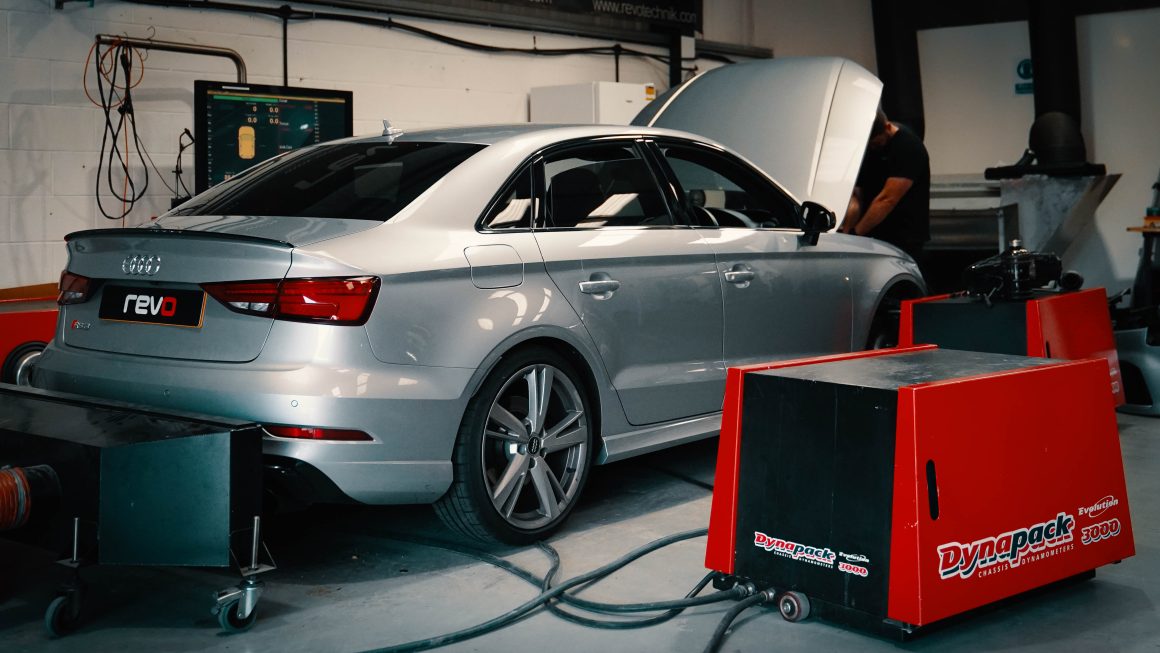
When we can test legally and safely in real-world conditions and use our dyno facilities for verification and vice versa why would we only develop on a dyno?
How important is high speed ‘real world’ testing on a proving ground?
You could argue that our customers will mainly be driving on the road at up to legal speeds so we don’t need to test at triple-figure (MPH) speeds.
However, when we have customers all over the world driving in a number of different conditions on the road and the race track in different scenarios our high-speed testing is a crucial requirement.

We couldn’t develop our products to the same level if we weren’t able to do it. Putting a vehicle through this kind of testing allows us to push it to levels that the majority of customers would never quite get to.
In doing that we ensure that we’ve exceeded anything a customer would be able to do and covered all bases.
We know what’s going to happen at speed and how our products will perform which is why we’re always 100% confident in both the quality and performance of everything we offer.
Do we only make one trip to a proving ground to test a vehicle? Or multiple trips?
Testing at a proving ground isn’t a one-off per development project it plays a large part in any project and is something we tend to do a few times a week.
For many years we had an office space at Bruntingthorpe as we were on the test track so often.
Using facilities as Millbrook enables us to run all our development testing on our own vehicles which gives us the knowledge and control to be able to continue development with distributors in remote regions around the world.

Once we’ve completed testing in the UK (or on-site elsewhere in the world) our Global Development Programme is used to refine control systems. Accounting for fuel variations and altitude adjustments required in different regions.
This wouldn’t be possible without the in-depth testing we do behind the scenes before we entertain region-specific fine-tuning.
What’s the plan with Millbrook going forward?
It’s business as usual for Revo; Millbrook has become a very useful resource for us. Our testing programmes continue as previously but now at a much better facility. We’re just travelling south rather than northbound on the M1 to get there.

Words by: Kev Hall, Revo Technical Development Manager

